
How Much CO₂ One Bioreactor Can Remove
- One unit can remove approximately 1.5 – 2 tonnes of CO₂ from the atmosphere a year at present. Our next goal is for each unit to remove 5 tonnes of CO₂ per year and eventually reach 10 tonnes (and beyond) of CO₂ removal annually.
- We are confident we can achieve these milestone CO₂ absorption levels with additional research and development into optimizing our bioreactors.
- Each of our bioreactors is capable of removing the equivalent of 40 trees worth of CO₂ from the air.
- Deploying 100 bioreactors will be equivalent to planting at least 4,000 trees, or a small forest. Imagine what we can do by just deploying 100 bioreactors on each rooftop around the world.
Nature By the Numbers
- One mature tree, on average, absorbs around 25 kg of CO₂ per year with a range of 10-40 kg of CO₂ annually, depending on various factors.
- It takes approximately 25-100 trees to absorb 1 metric tonne of CO₂ from the air annually. At an average annual rate of 25 kg of CO₂, it would take 40 trees to absorb 1 metric tonne of CO₂.
- It is estimated that approximately 250 billion tonnes of carbon dioxide are converted by photosynthesis annually by land and sea-based organisms.
- By emitting billions of additional tonnes of CO₂ into the air for the last few centuries, we have disturbed Earth’s natural carbon cycle.

Annual Global Emissions
- According to the International Energy Agency, “Global energy-related CO₂ emissions grew in 2022… reaching a new high of more than 36.8 billion tonnes”.
- However, estimates for annual global emissions of CO₂ are difficult to ascertain. The US Department of Energy, for example, estimates the need to remove 400 million to 1.8 billion metric tonnes of CO₂ annually from the US alone to achieve net zero by 2050.
At an Eventual Price of $500 Each
- Each unit costs approximately US$1,800 to build at present.
- We plan to significantly reduce this amount once we start mass production with a target price of below US$500 each.


Scaling Up
- At present each of our DAC Everywhere™ units is capable of absorbing at a rate of approximately 1.5 – 2 metric tonnes of CO₂ annually, or the equivalent of about an acre worth of trees.
- The cost of removing additional amounts of CO₂ from the air will be reduced as we scale up our operations.
- Eventually, we expect each unit to have a manufacturing cost of about US$500 a unit, each capable of removing 10 tonnes of CO₂ a year, or the equivalent of many acres’ worth of trees.
- Using conservative estimates, we will be demonstrating a variety of scenarios below using a price of US$1000 per unit at a CO₂ absorption rate of 5 tonnes per year.
100 Million Bioreactors
To offset 500 million tonnes of CO₂ a year, we will need to deploy 100 million DAC Everywhere™ units at a cost of US$100 billion, a target achievable by 2035.


1 Billion Tonnes of CO₂
Our current estimate is that it will cost US$200 billion to build 200 million bioreactors to remove a billion tonnes of CO₂ from the air annually. This will be a one-time cost for manufacturing 200 million DAC Everywhere™ units to be deployed around the world. We expect deployment costs to be an additional 20% on top of the $200 billion price tag.
Now Imagine What 8 Billion Bioreactors Could Do
There were almost 15 billion operating mobile devices in 2021, according to www.statista.com. This number is expected to reach over 18 billion by 2025.
Number of mobile devices worldwide 2020-2025 | Statista
Assuming a global CO₂ emission rate of 40 billion tonnes per year, it would take 8 billion bioreactors to single-handedly reach net zero by removing all 40 billion tonnes of CO₂ generated, 10 billion units less than the over 18 billion mobile devices expected to be in use by 2025.
As many countries around the world struggle to reach their net zero goals by 2050, we may be closer to reaching those goals if we are able to scale up manufacturing of our bioreactors to closely match the rate at which the world produces mobile devices.

Current Cost Estimates v. Our Project Costs

Current Cost Estimates to reach net zero:
$9.2 Trillion a Year, Every Year, Until 2050
According to a recent report by McKinsey, “the transformation of the global economy needed to achieve net-zero emissions by 2050 would be universal and significant, requiring $9.2 trillion in annual average spending on physical assets, $3.5 trillion more than today. ”
That’s $9.2 trillion in spending every year for the next quarter of a century to reach net zero by 2050.

Our Project’s cost to reach net zero:
A One-Time Cost of $8 Trillion
At a cost of US$1000 per unit, and at a rate of 8 billion units, the cost to manufacture enough bioreactors to reach net zero through our project alone is a one-time US$8 trillion investment. This $8 trillion estimate does not include operational and other capital expenses, and only covers the cost of manufacturing the 8 billion units needed to reach net zero through our network of bioreactors. However, as we scale up manufacturing, and increase our R&D in bioreactor design, our units will decrease in cost and increase in the amount of CO₂ each unit removes from the air, significantly decreasing the cost to reach net zero to less than the initial US$8 trillion price tag.

10,000 Cities
For the purposes of our hypothetical analysis to reach net zero on our own, and assuming approximately 10,000 cities worldwide, we would need to place approximately 800,000 bioreactors in each city, in densely populated areas, on top of buildings, and along transportation routes. This amount of bioreactors would be effectively able to remove approximately 40 billion tonnes of CO₂, getting us to net zero.
Obviously, the density spread of our bioreactors’ deployment would be dependent on population density and area of each city; some of the larger, more densely populated cities will naturally be able to handle a larger network of bioreactors.
195 Countries
There are approximately 195 countries on Earth. With our project, every nation will be able to control the number of bioreactors they put online; if every nation puts on the number of bioreactors needed to negate their annual carbon emissions, we believe we will be able to reach net zero in the shortened time frame needed to keep global temperatures at or below the 1.5 °C called for in the Paris Agreement.

Government Partnerships around the world

Integral to our project’s scalability
Local governments around the world will play a big role; with our project, we will need to place our bioreactors in thousands of cities, towns and municipalities around the world, making local governments, and their national partners, an integral part of our project’s scalability.

We are forging a path forward to achieving net zero faster and at a lower cost.
The Cost to Reach Net Zero
With enough of our DAC Everywhere™ bioreactors online and deployed globally, theoretically, our network has the capability of achieving global net zero on its own. We use a hypothetical scenario below whereby our network of bioreactors is solely responsible for getting us to net zero. *This is for demonstration purposes only.
Without Our Project: An Overall Global Cost of $230 Trillion

According to a recent report by McKinsey, “the transformation of the global economy needed to achieve net-zero emissions by 2050 would be universal and significant, requiring $9.2 trillion in annual average spending on physical assets, $3.5 trillion more than today. ”
That’s $9.2 trillion in spending each year for the next quarter of a century to reach net zero by 2050.
That’s a total of $230 trillion in spending to reach net zero by 2050, compared to approximately $8 trillion to reach net zero through our project alone.
McKinsey estimates it will cost $9.2 trillion a year, every year for the next twenty-five years, to have any hope of reaching net zero. Our project requirement is a small fraction of this cost and is capable of making a significant dent in the quest for net zero.
This is how we forge a pathway for us to achieve net zero emissions faster and at a lower cost.
Through Our Project Alone: A One-Time Cost of $8 Trillion

At a cost of US$1000 per unit, and at a rate of 8 billion units, the cost to manufacture enough bioreactors to reach net zero through our project alone is a one-time US$8 trillion investment.
This $8 trillion estimate does not include operational and other capital expenses, and only covers the cost of manufacturing the 8 billion units needed to reach net zero through our network of bioreactors.
However, as we scale up manufacturing, and increase our R&D in bioreactor design, our units will decrease in cost and increase in the amount of CO₂ each unit removes from the air, significantly decreasing the cost to reach net zero to less than the initial US$8 trillion price tag.
These numbers are huge numbers, of course, but in the context of our ability as humans to build smart phones in the billions, we believe humanity is capable of building our little bioreactors in the billions as well. This is how we are:
Thinking big by building small.

Theoretically, our network has the capability of achieving global net zero on its own.
A Global Effort

Thankfully, We aren’t doing this alone.
With enough of our DAC Everywhere™ bioreactors online and deployed globally, theoretically, our network has the capability of achieving global net zero on its own. We used a hypothetical scenario above whereby our network of bioreactors was solely responsible for getting us to net zero. However, this was for demonstration purposes only.
Thankfully, we aren’t addressing the climate change problem on our own; while every effort needs to continue to be made to reduce and capture emissions, and to reduce our dependence on fossil fuels, we also need to address many other issues such as conserving our ecosystems and maintaining Earth’s biodiversity.
The climate crisis is a multi-faceted problem requiring many concurrent efforts by individuals, organizations, governments and corporations around the world.
A Global Effort
People around the world are coming together to try to find unique, innovative ways to help mitigate the climate crisis.
As we are able to scale up manufacturing, our contribution to the global effort to reach net zero will increase with each bioreactor we deploy; as stakeholders around the world work to reduce or remove their CO₂ emissions, our efforts will be in conjunction with all other efforts to reduce the global carbon footprint, such as the use of alternative fuels, reforestation, and the development of low carbon products and supply chains.
By definition, climate change is a global problem, and we should all be a part of the solution.


Controlling our CO₂ Emissions
With our project, each country, each state, region, county and municipality can have complete control over their net carbon CO₂ output. As we scale up our manufacturing capacity, our initiative can remove as much CO₂ from the air as our manufacturing capacity allows; we can build a network of 8 billion reactors globally to reach net zero, or we can build 800 million to achieve 10% of this goal.
These efforts will work concurrently and in conjunction with all other global efforts to reach net zero, including government and corporate policies and initiatives to reduce our global carbon footprint.
Balancing Industry and Nature
With our project, we can bring back an equilibrium between humans and nature, industry and the natural world, ensuring a healthy planet for future generations.
As the world continues its efforts to reduce its dependency on fossil fuels, there continue to be some industries that have not yet found a cleaner, more renewable energy resource such as the airline industry and commercial shipping; the world will continue to have some dependence on fossil fuels for the foreseeable future, but with our project, we can mitigate the CO₂ emissions from these industries, bringing more balance to our global climate.

ThE costs of carbon dioxide removal

Large Carbon Capture & Storage Facilities
Large scale Carbon Capture & Storage (CCS) facilities are resource intensive, requiring large plots of land and large amounts of capital, as well as the time it takes from the pre-feasibility study to the Engineering, Procurement and Construction stages to bringing these facilities online and getting them operational. Furthermore, they can take a lot of energy to operate. They are effective, but we need to build tens of thousands of these facilities to impact global emissions.
Simply put, they are too big, too slow and too costly.
For example, using statistics from the largest carbon capture and storage facility in the world, the Orca facility in Iceland:
- This facility captures approximately 4,000 tonnes of CO₂ per year when fully operational.
- This facility cost approximately US$10-15 million to build.

Our Small Bioreactors
We expect each machine to cost less than US$500 as we scale up; however, to use conservative estimates for this exercise, we are assuming a cost of US$1,000 per unit, and each unit capturing only 1 tonne of CO₂ per year.
Using the same amount of capital expenditure of US$10-15 million that the Orca facility in Iceland cost to build, we could expect the following:
- With US$10 million, we could build 10,000 bioreactors. Assuming each bioreactor only yields 1 tonne of carbon capture annually, these 10,000 bioreactors would capture 10,000 tonnes annually.
- With US$15 million, we could build 15,000 bioreactors, resulting in 15,000 tonnes of CO₂ captured annually.
- These numbers are in contrast to the 4,000 tonnes of CO₂ captured annually by the world’s largest Carbon Capture and Storage facility.
additional expenses
Other Capital Expenditures
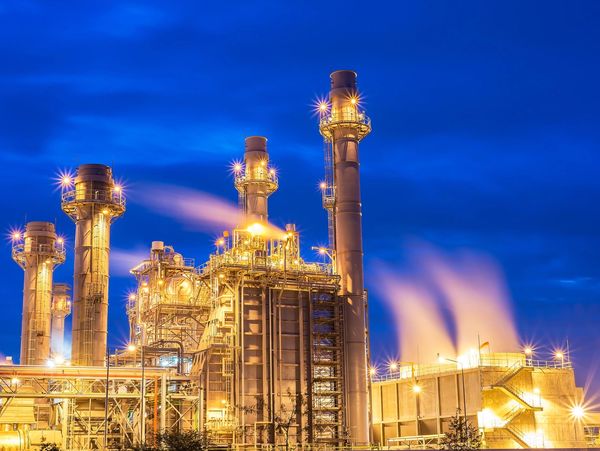
Excluding the cost of manufacturing our bioreactors, additional capital expenditures will be required. These include the following:
- Building or retrofitting manufacturing facilities (for bioreactors and drones)
- Setting up a drone command center to service and maintain the bioreactors
- Setting up a facility to produce our microalgae for the bioreactors
Expenses Across the Globe
We expect operational expenses to be country-specific, as each country has its own labor laws, its own workforce, and its own economy with country-specific market forces at work.

Operational Expenditures: A Skilled Workforce
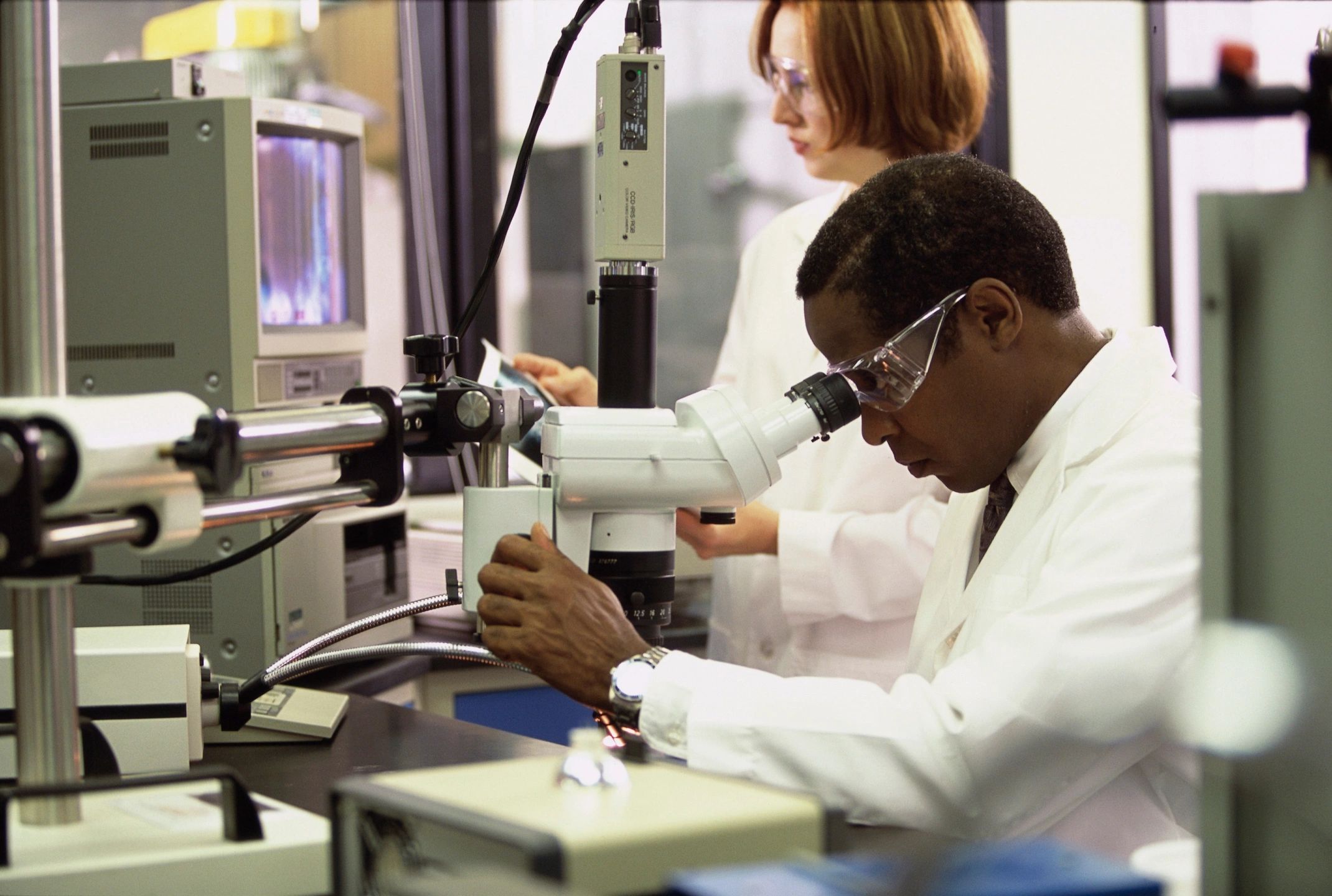
As we create jobs by the thousands, we will need a skilled workforce to fill a variety of roles in numerous capacities.
Some of these include:
- Factory personnel
- Command center personnel
- Technicians
- Scientists
- Government liaison personnel
- Compliance officers
- Public relations personnel
job creation by the thousands
Job Creation Across the Globe
Job creation potentials as we transition towards mass production are huge. We plan to set up operations in countries around the world, hiring a local workforce and creating thousands of jobs in the process.


Creating Thousands of Jobs Globally
As we set up operations in countries around the world, we will be hiring a local, skilled workforce in the thousands to manufacture, deploy and operate our network of bioreactors. Job creation potentials as we transition towards mass production are huge. We plan to set up manufacturing facilities in each country, working with local and national governments, creating thousands of jobs around the world as we scale up the production of our bioreactors and drones. Servicing our bioreactors and drones will also require a skilled workforce to accomplish our mission at each location. Continuous R&D (Research & Development) and collaboration with universities, top scientists and engineers from around the world is another essential element for us to further optimize our operations to produce better results.

A Skilled Workforce in a Variety of Roles
As we create jobs by the thousands, we will need a skilled workforce to fill a variety of roles in numerous capacities.
Examples include:
- Factory personnel
- Command center personnel
- Technicians
- Scientists
- Government liaison personnel
- Compliance officers
- Public relations personnel

Command center Personnel
We will need command center personnel to oversee daily operations, and the overall network.
Factory Personnel
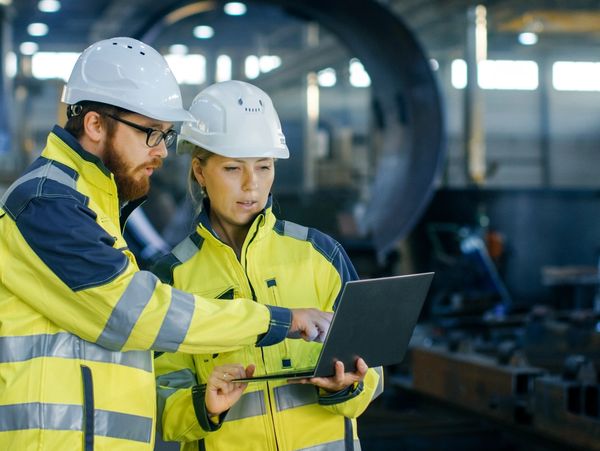
Factory personnel will be needed to manufacture our bioreactors, and eventually our drones. As we scale up our manufacturing capacity, and build our own manufacturing facilities, we will need thousands of people to fill these jobs globally.

Technicians
Skilled technicians will be needed to install the bioreactors, troubleshoot them when needed, and oversee and maintain our fleet of drones.
Scientists
We will need skilled scientists to oversee data analysis and produce our genetically engineered microalgae, ensuring each strain produced is optimal for its environment.

Compliance Officers
We will need a solid team of compliance officers to ensure we are compliant in all aspect of local, national and international laws and regulations.

Government Liaison Personnel
Government liaison personnel will play an integral role in working with local and national governments regarding overall planning and implementation of the network and planning strategic optimal placement of each bioreactor. They will also be responsible for aligning the overall CO₂ removal numbers of our network in relation to local and national CO₂ emissions levels and objectives, and reporting these numbers to their local jurisdictions and relevant international bodies.

A Strong PR Department
We will need a strong public relations team with excellent marketing skills to raise awareness and to get public support behind our project, through a variety of means including social media. They will also be working with local governments, national governments and international organizations to raise public awareness and support of our project.
We realize we cannot do this alone and we will need the support of the global community in order to accomplish our goal of significantly reducing global CO₂ levels.
A Global Network of People
As we build momentum behind our project and scale up operations around the world, we will need thousands of people who believe in our mission to join our team. Together, we can do this: we can solve climate change.

FAQs
If the natural carbon cycle removes more than human-generated CO₂ globally, why are we so worried about our CO₂ emissions?
“The planet naturally releases and absorbs far more carbon dioxide than humans emit by burning fossil fuels. The problem is that human activities have thrown the Earth’s carbon cycle out of balance. “
How much carbon dioxide does the Earth naturally absorb? | MIT Climate Portal
As referenced earlier, if approximately 250 billion tonnes of CO₂ are removed through photosynthesis by land and sea-based organisms, and we are only generating 40 billion tonnes of CO₂ per year, why are we so concerned about our CO₂ emissions?
The answer has to do with Earth’s natural carbon cycle. The earth since the last ice age has found an equilibrium between CO₂ input and output that allowed for a flourishing global ecosystem. It is only with the addition of CO₂ emissions through the burning of fossil fuels that Earth’s natural carbon cycle has been thrown off balance. The accelerated rate at which humanity has added to Earth’s carbon dioxide levels cannot be processed fast enough to keep pace with our burning of fossil fuels. As such, the Earth’s delicate balance has been disturbed, with dire consequences for humanity and Earth’s ecosystems, including its biodiversity.
It is the aim of the Canterhill Carbon Project to help reduce carbon dioxide levels globally, in order to restore Earth’s balance, protect diverse ecosystems, and ensure a healthy planet for generations to come.